
Metal Roofing · Glide, OR
Metal roofing in Glide, Oregon.
Up the North Umpqua where the rivers collide and the Cascades begin, Glide lives with forest on every side — heavy snow some winters, and the wildfire memory of 2020. A Class A metal roof is the answer to all of it: it sheds embers, snow, debris, and rain, and lasts 40–70 years doing it.
Quick answer: metal roofing in Glide
Metal roofing is especially well suited to Glide. Set in the forested North Umpqua canyon that the 2020 Archie Creek Fire tore through, Glide homes face genuine wildfire exposure — and a Class A metal roof gives embers nothing to ignite while shedding the heavy fir and pine debris that fuels rooftop fires. Metal also sheds the occasional mountain snow, drains heavy rain, refuses to grow moss, and lasts 40–70 years versus roughly 20–25 for asphalt. It runs about 2–3× asphalt upfront. Our crew reaches Glide in about 40 minutes via Highway 138.
Local Knowledge
Roofing at the edge of the Cascades.
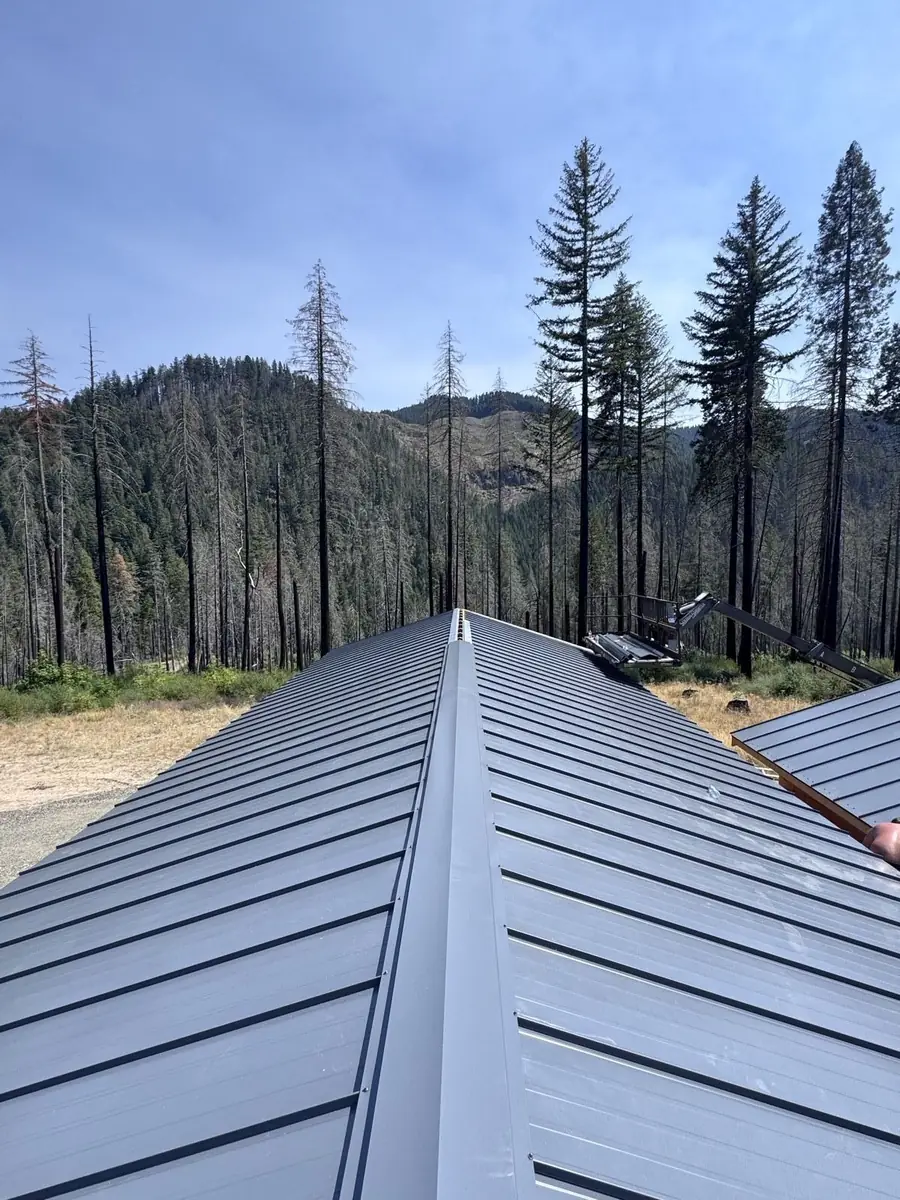
Glide sits about 17 miles east of Roseburg on Highway 138, the North Umpqua Highway, right where the North Umpqua and Little River meet at the famous Colliding Rivers. It's the gateway to the high country — Umpqua National Forest, the waterfall corridor, and the Cascades beyond — which means Glide roofs face conditions the valley towns don't. Elevation brings the occasional real snow load. The dense surrounding forest brings a heavy debris drop and, every dry summer, serious fire concern; the 2020 Archie Creek Fire burned through this canyon and is still fresh for many residents.
A metal roof is built for exactly this environment. Its non-combustible, Class A assembly denies embers a foothold and won't collect the dry needles that let rooftop fires start. Its smooth surface sheds snow instead of letting it sit and saturate the roof, and where snow-shedding needs to be controlled we can add snow retention. And it drains the North Umpqua's heavy rain off steep mountain pitches fast. For homes, cabins, and shops out here, it's less a luxury than the right tool for the terrain.
- Wildfire country — Class A metal is the headline reason to choose it here
- Mountain snow — a smooth roof that sheds load instead of holding it
- Heavy forest debris — fir and pine needles metal won't let accumulate
- Cabins & rural shops — durable, low-maintenance roofing far from town
Two Systems
Standing seam or through-fastened.
For fire- and snow-exposed mountain homes, the assembly details matter as much as the panel. We build both right.
Standing seam
Concealed fasteners and interlocking panels — the premium, longest-lived choice and excellent at shedding snow off steep pitches.
Through-fastened
Exposed-fastener panels — rugged and affordable for cabins, shops, and outbuildings on forest lots.
Class A fire assemblies
The reason metal makes so much sense in Glide — ember-resistant details built right, from underlayment up.
Snow retention when needed
We can add snow guards to control where snow releases over doors, walkways, and drives.
The Offer
We come to you — with $500 off and free gutters.
Glide is out of the way for a lot of contractors, but not for us — we serve the North Umpqua corridor regularly. Every new roof gets $500 off right now, plus free whole-home gutters on qualifying roofs of $20,000 or more. In fire country, gutters that don't collect dry debris are genuine protection, not just convenience. Weighing metal against shingles? Our metal vs. asphalt guide lays out the trade-offs, and our guide to roof lifespan in Oregon covers the durability math.
The Honest Math
What metal costs in Glide.
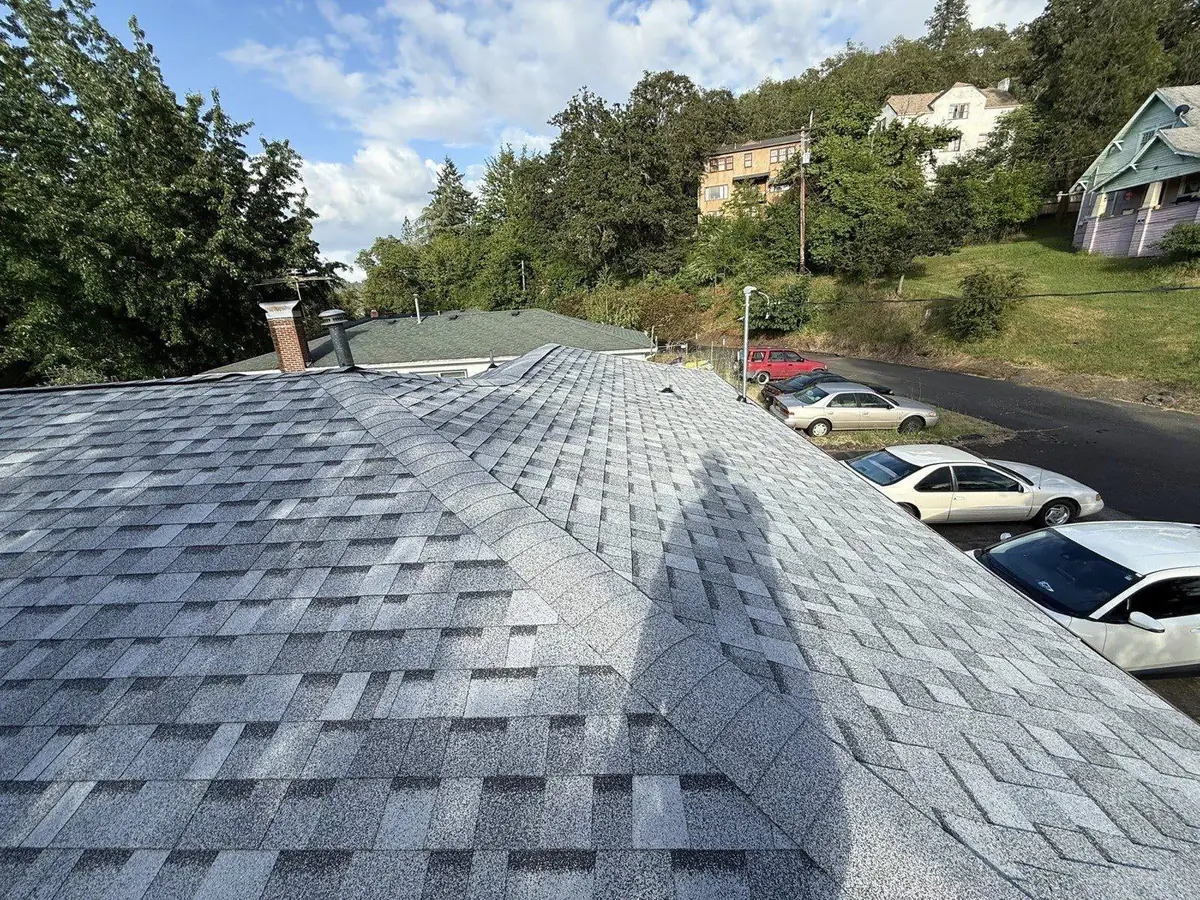
Expect roughly 2–3× the price of asphalt, and note that steep mountain pitches or tricky access on a forest lot can push labor higher. Douglas County asphalt replacements generally run $10,000–$25,000, so metal sits above that. But for a home surrounded by trees, metal's fire performance, snow shedding, and 40–70 year life — with no recurring moss removal — often make it the only roof that truly fits the setting.
If asphalt is the better fit for your budget or plans, we'll tell you straight, and there are Class A shingle options too — see our roof replacement page. For the full metal picture, start with our metal roofing overview and nearby Roseburg metal roofing.
Questions
Glide metal roofing FAQs
Why is metal recommended for Glide?
Mostly fire. Glide sits in the forested North Umpqua canyon that the 2020 Archie Creek Fire tore through. A Class A metal roof gives embers nothing to ignite and sheds the heavy fir and pine debris that fuels rooftop fires. It also sheds snow, drains heavy rain, and lasts 40–70 years.
Is metal good for snow up here?
Yes. At Glide's elevation the occasional snow load matters, and a smooth metal roof sheds snow rather than letting it sit and saturate the assembly. On steeper pitches snow slides off cleanly, and we can add snow retention to control where it releases.
Do you actually travel out to Glide?
Yes — Glide is about 40 minutes from our Riddle shop, up I-5 to Roseburg then east on Highway 138. We serve the North Umpqua corridor regularly. See our Glide service-area page.
Do I need a permit?
Yes — Douglas County reroofs generally require a permit, and overlays aren't allowed, so the old roof comes off first. We handle the permit and inspections; see our permit guide.
Glide, armor your home against fire, snow, and rain.
Free written estimate with Class A fire options — plus $500 off and free gutters on qualifying roofs.